Choosing between different dental implants types can feel overwhelming. This guide on dental implants types by Jackson County, IL explains the two main options and how we decide which is best for you. Our oral surgeon places the implant post and abutment and works with your general dentist to deliver the final prosthetic. We do not perform same-day consult-to-surgery appointments — careful review of each case matters to your long-term health.
Which dental implants types by Jackson County, IL are covered here
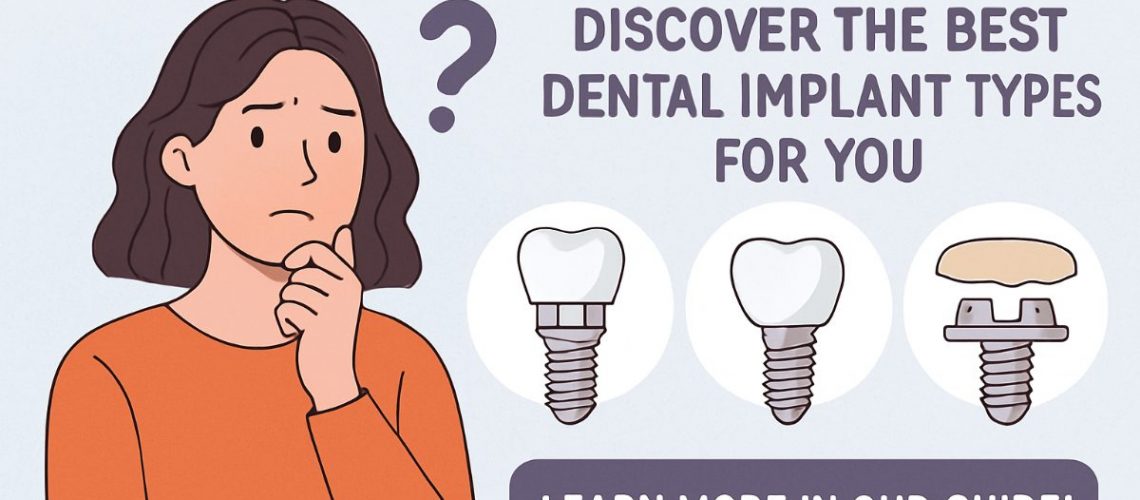
This guide focuses on the two primary categories of dental implants types by Jackson County, IL: endosteal implants and zygomatic implants. We do not cover mini or subperiosteal implants. These two types cover the vast majority of cases for patients with missing teeth or severe upper jaw bone loss.
Endosteal implants: the most common dental implants types by Jackson County, IL
What an endosteal implant is
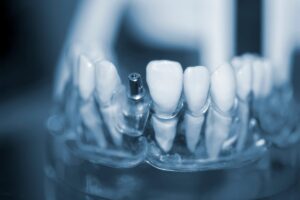
An endosteal implant is a titanium or zirconia post placed directly into the jawbone. These posts act as artificial tooth roots and support crowns, bridges, or full-arch prostheses. Endosteal implants are the standard choice for single-tooth replacement, several missing teeth, or full-arch restorations when there is adequate jawbone.
Process and timeline
The typical steps for endosteal dental implants types by Jackson County, IL are:
- Initial consultation, CBCT imaging, and medical review.
- Tooth extraction if needed, often planned so extraction and implant placement can occur on the same day when appropriate.
- Implant placement by the oral surgeon and healing phase (osseointegration), usually several months.
- Abutment placement, then final prosthesis fabricated and placed by your general dentist.
Zygomatic implants: when these dental implants types are needed by Jackson County, IL
Zygomatic implants are longer implants that anchor into the cheekbone (zygoma). We recommend zygomatic dental implants types by Jackson County, IL when the upper jaw has severe bone loss and traditional endosteal implants are not feasible without extensive grafting. Typical candidates are patients with long-term missing upper teeth, failed implants, or those who want to avoid multiple grafting surgeries.
How we decide which dental implants types are right for you in Jackson County, IL
Choosing among dental implants types by Jackson County, IL depends on several factors:
- Bone quantity and quality in the jaw
- Overall health, smoking status, and medications
- Number and location of missing teeth
- Esthetic goals and timeline
- CBCT imaging and a clinical exam guide the decision
CBCT imaging gives a 3D view of bone and anatomy and is essential in planning the right implant type and position.
Typical treatment steps for these dental implants types near Jackson County, IL
Pre-op planning (no same-day consult-to-surgery)
We schedule a thorough consult, obtain CBCT scans, review medical history, and coordinate care with your general dentist. Interdisciplinary planning ensures the final prosthesis will meet esthetic and functional goals. No same-day consult-to-surgery shortcuts are used — planning matters.
Surgery & immediate care
After planning, surgery is scheduled. In many cases a tooth can be extracted and an implant placed the same day, but only when the pre-op review supports it. Post-op instructions, pain control, and follow-up visits are provided to support healing.
Final restoration
The oral surgeon places the implant post and abutment. Your trusted general dentist fabricates and places the crown, bridge, or overdenture. Close communication between surgeon and GP ensures the best esthetic and functional result.
How advanced tech improves outcomes for dental implants types by Jackson County, IL
- IS 3800W intraoral scanner — captures accurate digital impressions for precise prosthetics.
- X-Guide 3D dynamic navigation — guides implant placement for high accuracy and safety.
- CBCT — 3D imaging of bone and anatomy for confident planning.
- Osstell ISQ — measures implant stability to guide timing of restorations.
- PRF (Platelet-Rich Fibrin) — enhances healing and tissue regeneration.
- PIEZOSURGERY® — precise bone cutting with less trauma.
- PerioLase™ — laser therapy to improve soft tissue health around implants.
- Accuvein — helps with safer IV access when sedation is used.
Benefits and risks of each dental implants type by Jackson County, IL
Endosteal implants generally have high success rates and predictable recovery when bone is adequate. Risks include infection, implant failure, and need for bone grafting in some cases. Zygomatic implants offer a solution when upper jaw bone is insufficient but involve a more complex surgery, longer recovery, and different risk profile. Sinus lifts or grafts may still be needed for some cases.
Working together: oral surgeon + your general dentist for implant prosthesis
The oral surgeon focuses on implant post and abutment placement. Your general dentist designs and places the crown, bridge, or overdenture. Ongoing communication and shared planning ensure proper fit, bite, and esthetics.
Why local patients choose our team
Patients across Marion and nearby communities choose our team for expert care in implant planning and surgery. Our office is about 15 minutes away in Carbondale, IL. We prioritize patient health over speed, offer full-value care, and maintain 24-hour collaboration with personal cell phone access for continuity of care.
Other oral surgery services we provide
- Extractions (routine and surgical)
- Bone grafting and sinus lifts
- Platelet-Rich-Fibrin (PRF) therapy
- Emergency oral surgery
- Soft tissue management and laser therapy
Next steps
If you want a careful review of which dental implants types by Jackson County, IL fit your case, call to schedule a thorough consultation. We will obtain imaging, review your health, coordinate with your general dentist, and develop a clear, patient-focused plan.