
The process of getting a dental implant by Carbondale, IL begins with a careful plan between you, an oral surgeon, and your general dentist. The oral surgeon places the implant post and abutment and manages surgical care; your general dentist completes the final crown or prosthesis. This team approach keeps care safe and predictable.
What is a dental implant?
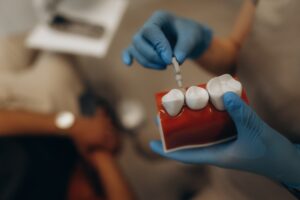
A dental implant is a titanium post placed into the jawbone to replace a missing tooth root. The implant post supports an abutment, which connects to the final crown or denture. The oral surgeon places the post and abutment; your general dentist fabricates and places the prosthetic crown or denture to restore chewing and appearance.
Step-by-step process of getting a dental implant by Carbondale, IL
1) Consultation & careful treatment planning
Your first visit is a consult, not same-day surgery. The surgeon reviews medical history, medications, and goals, plus any previous dental work. Time to review these details reduces risk and creates a clear plan with your general dentist for the final restoration.
2) Advanced imaging and digital planning
CBCT scans and intraoral scans create 3D views of your jaw. Tools like X-Guide allow 3D planning and guided placement. Digital planning improves accuracy and helps avoid nerves and sinuses.
3) Surgery: extraction (if needed) and implant placement
If a tooth must be removed, extraction can often be followed by implant placement the same day when appropriate. The surgeon may use PIEZOSURGERY® for precise bone work and PRF to speed healing. Office-based anesthesia options make the procedure comfortable.
4) Abutment placement and coordination with your GP
The surgeon positions the abutment and monitors initial stability. Devices like the Osstell ISQ measure implant stability to guide timing. Once the implant is ready, your general dentist fabricates and places the final crown or prosthesis—this practice does not place crowns.
5) Healing, osseointegration, and follow-up
Bone typically bonds to the implant over several months — a process called osseointegration. Regular follow-up visits check healing and stability; Osstell ISQ readings help decide when to move forward with the restoration.
What can change the timeline for the process of getting a dental implant by Carbondale, IL?
Bone grafts, sinus lifts, active infection, smoking, and uncontrolled diabetes can add procedures or lengthen healing. Each added step means more visits and longer time before the final crown is placed.
What to expect the day of surgery for the process of getting a dental implant by Carbondale, IL
You’ll discuss anesthesia options beforehand. AccuVein helps make IV placement easier. Expect some swelling, mild pain, and light bleeding after surgery. Follow home-care instructions: soft foods, oral rinses as directed, and pain control. Emergency contact is available if problems arise.
How success is measured and why technology matters
Success is measured by stable osseointegration, measured with Osstell ISQ, and by accurate placement using CBCT and X-Guide. These technologies lower complications, protect nearby structures, and improve long-term outcomes.
About Oral & Maxillofacial Surgery of Carbondale
Oral & Maxillofacial Surgery of Carbondale places 600+ implants a year under board-certified surgeon Dr. Billy B. Laun II. The team uses X-Guide, CBCT, Osstell ISQ, PRF, PIEZOSURGERY®, and other advanced tools, then coordinates closely with your general dentist for the final prosthetic restoration. The office serves the Marion, IL area and nearby Southern Illinois counties.
How to get started near Carbondale
Schedule a consult, gather recent dental records and X-rays, and let your general dentist know you’re planning implants so they can coordinate the restoration plan.
Other oral surgery services offered
Wisdom tooth removal, LANAP®/LAPIP™ laser therapy, orthognathic surgery, TMJ care, and oral pathology. Contact the office to schedule an evaluation and coordinate care with your general dentist.